Pain Management
Acupuncture for Sciatica: Relief from Nerve Pain
7 min read
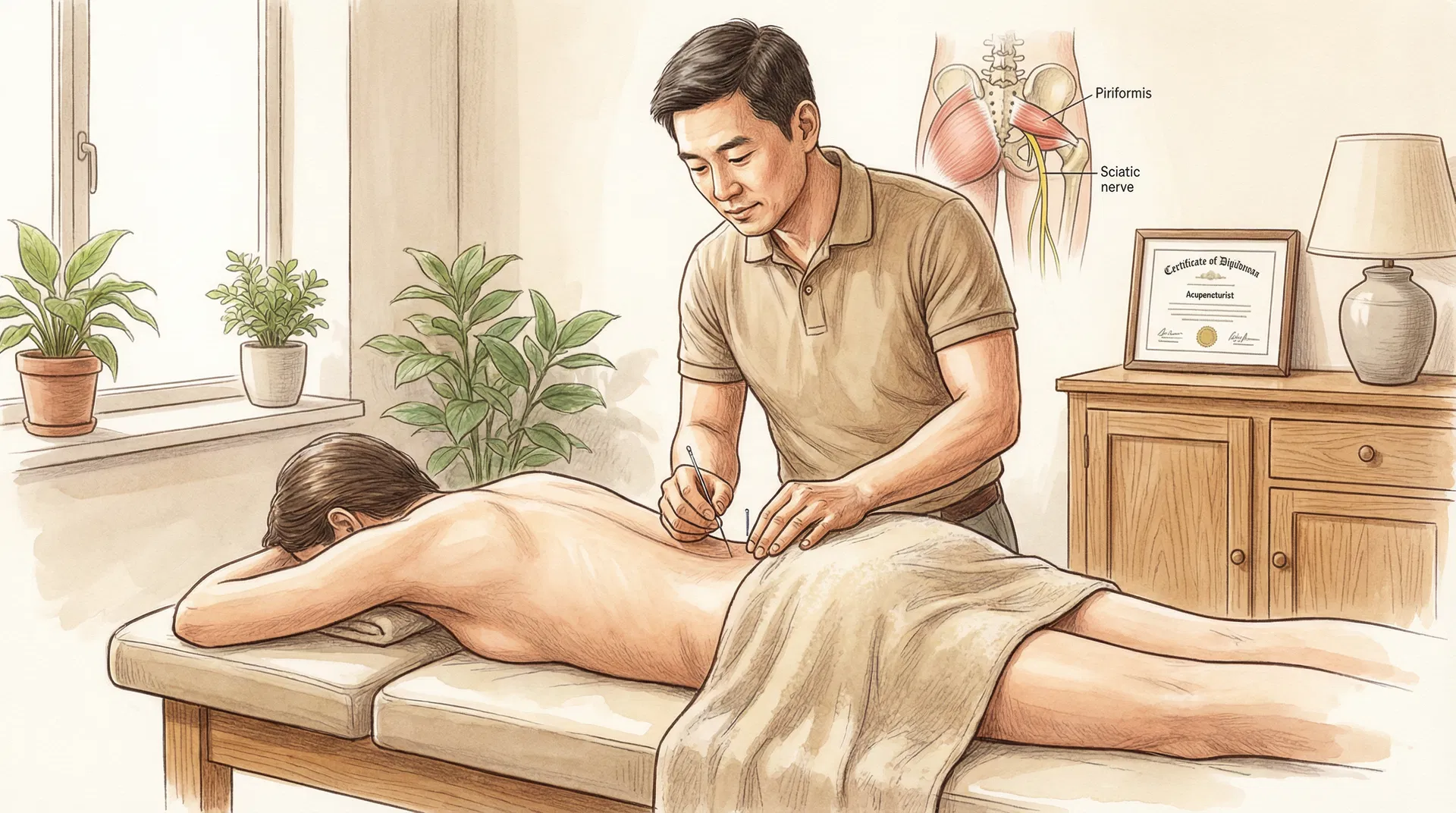
Piriformis syndrome is one of the most under-diagnosed pain issues I've seen in my career. Many patients with piriformis syndrome are misdiagnosed with sciatica—and while the symptoms can feel identical, the underlying cause is very different.
Here's the key distinction: Sciatica is typically caused by a herniated disc or spinal misalignment compressing the sciatic nerve. Piriformis syndrome, on the other hand, is caused by a deep gluteal muscle called the piriformis that tightens or goes into spasm and pinches the sciatic nerve.
This muscle injury can affect the nerve in a way that feels remarkably similar to sciatica, which is why so many patients are misdiagnosed and receive ineffective treatment.
Patients with piriformis syndrome typically describe their symptoms in a very specific way:
The sensation is often described as a deep ache or burning pain in the buttock that may radiate down the back of the leg. Some patients feel numbness or tingling in the leg, which can further confuse the diagnosis.
The reason piriformis syndrome is so commonly misdiagnosed as sciatica is that both conditions compress the sciatic nerve, creating similar pain patterns. However, the location of the compression is different:
A proper diagnosis requires careful palpation and assessment. During your consultation, we'll perform specific tests to determine whether your pain is coming from spinal compression (sciatica) or from the piriformis muscle (piriformis syndrome). This distinction is critical because the treatment approach differs.
Our pain relief acupuncture is highly effective for piriformis syndrome because it directly addresses the root cause: the tight, spasmed piriformis muscle.
The piriformis is a deep gluteal muscle that's difficult to reach with conventional stretching or massage. Acupuncture needles can penetrate to this deep muscle layer and trigger its release. When the muscle relaxes, it stops pinching the sciatic nerve, and pain relief often occurs rapidly.
When a muscle is in spasm for extended periods, inflammation develops around it. Acupuncture helps regulate this inflammatory response, allowing the muscle to heal and preventing the spasm from recurring.
Once the piriformis muscle releases and inflammation decreases, the sciatic nerve is no longer compressed. This allows normal nerve function to return, eliminating pain and any numbness or tingling.
Beyond immediate pain relief, acupuncture helps restore proper muscle function and neuromuscular coordination. This reduces the likelihood of the piriformis going back into spasm.
Treatment for piriformis syndrome is similar to treatment for low back pain, but with important differences based on your specific presentation.
Muscles We Target:
The most important aspect of treatment is getting the deep gluteal muscles (particularly the piriformis) to release and relax. We may also address compensation patterns in the hamstrings, hip flexors, and lower back, as these muscles often tighten when the piriformis is in spasm.
Treatment Frequency:
Most patients benefit from 1-2 sessions per week initially. Many experience significant relief within 4-6 treatments, though some cases require extended treatment depending on how long the condition has been present.
What to Expect:
During your first visit, we'll perform a thorough assessment to confirm piriformis syndrome and rule out other causes of buttock pain. We'll palpate the piriformis muscle and perform specific tests to identify exactly where the muscle is tight or spasmed. Based on this assessment, we'll develop a personalized treatment plan.
These two conditions can feel very similar, but they have different causes. Here's how to tell them apart:
Sciatica:
Piriformis Syndrome:
The Bottom Line:
If your pain starts in your lower back and gets worse when you bend forward, it's likely sciatica. If your pain is deep in your buttock and gets worse when you sit or cross your legs, it's likely piriformis syndrome. During your first visit, we'll perform specific tests to determine which condition you have—or if you have both.
Many patients with piriformis syndrome have tried physical therapy, massage, or stretching without success. Here's why acupuncture is often more effective:
That said, acupuncture works best when combined with stretching and lifestyle modifications. We'll provide specific stretches and ergonomic advice to support your healing between treatments.
When you come in for treatment of piriformis syndrome:
1. Comprehensive Assessment — We'll evaluate your symptoms, perform palpation tests, and confirm the diagnosis
2. Differential Diagnosis — We'll rule out sciatica and other causes of buttock pain
3. Personalized Treatment Plan — Based on our findings, we'll create a treatment protocol specific to your condition
4. Acupuncture Treatment — Thin, sterile needles are placed to release the piriformis muscle and reduce inflammation
5. Aftercare Guidance — We'll provide stretches, ergonomic advice, and lifestyle modifications to support your healing
Most patients feel immediate relief after their first treatment, with continued improvement over 4-6 visits.
At In Balance Acupuncture Clinic in Franklin, TN, we have extensive experience treating piriformis syndrome and distinguishing it from sciatica. Many patients come to us after being misdiagnosed elsewhere, and we're able to provide accurate diagnosis and effective treatment.
Our practitioners use both traditional Japanese acupuncture and Traditional Chinese Medicine techniques to address the root cause of your pain. We've successfully treated hundreds of patients with piriformis syndrome, and many are surprised by how quickly acupuncture can resolve their deep buttock pain.
If you're experiencing deep buttock pain that feels like sciatica, acupuncture can help. Contact In Balance Acupuncture Clinic in Franklin, TN today to schedule your consultation.
Call us at (615) 260-6944 or Book an Appointment
---
Q: How do I know if I have piriformis syndrome or sciatica?
A: The best way to know is to come in for an assessment. We'll perform specific palpation tests and ask detailed questions about your symptoms to determine the source of your pain. Sciatica typically involves lower back pain and forward bending makes it worse, while piriformis syndrome is deep buttock pain that's worse with sitting and crossing your legs.
Q: Can acupuncture cure piriformis syndrome permanently?
A: Acupuncture can provide lasting relief by releasing the piriformis muscle and addressing the underlying inflammation. However, if you return to the same activities or postures that caused the problem initially, the syndrome can recur. We'll provide stretches and ergonomic advice to help prevent recurrence.
Q: How many treatments do I need?
A: Most patients see significant improvement within 4-6 treatments. Some cases resolve faster, while chronic cases may require additional sessions. We'll assess your progress and adjust your treatment plan accordingly.
Q: Is acupuncture painful for piriformis syndrome?
A: Acupuncture needles are extremely thin and most patients don't feel pain during treatment. Because we're treating a deep muscle, you may feel a sensation of release or pressure relief, which is actually a positive sign that the muscle is responding to treatment.
Q: Can I continue my normal activities during treatment?
A: We recommend modifying activities that aggravate your symptoms (like prolonged sitting or certain exercises) during the initial treatment phase. Once you're feeling better, we'll gradually reintroduce activities. We'll provide specific guidance based on your situation.
Q: What if acupuncture doesn't work?
A: While acupuncture is highly effective for piriformis syndrome, we understand that every patient is different. If you're not seeing improvement after 4-6 sessions, we'll reassess your condition and discuss alternative approaches or referrals to other specialists if needed.
Q: Is piriformis syndrome related to my sciatica?
A: It's possible to have both conditions simultaneously—sciatica from spinal compression and piriformis syndrome from muscle tightness. During your assessment, we'll determine if both conditions are present and adjust your treatment accordingly.
---
Piriformis syndrome often occurs alongside other pain conditions. Understanding these related issues can help you get comprehensive treatment:
Pain Management Chain:
Stress & Wellness:
Explore other pain management solutions: