Acupuncture for Morton's Neuroma: Sharp Foot Pain Relief
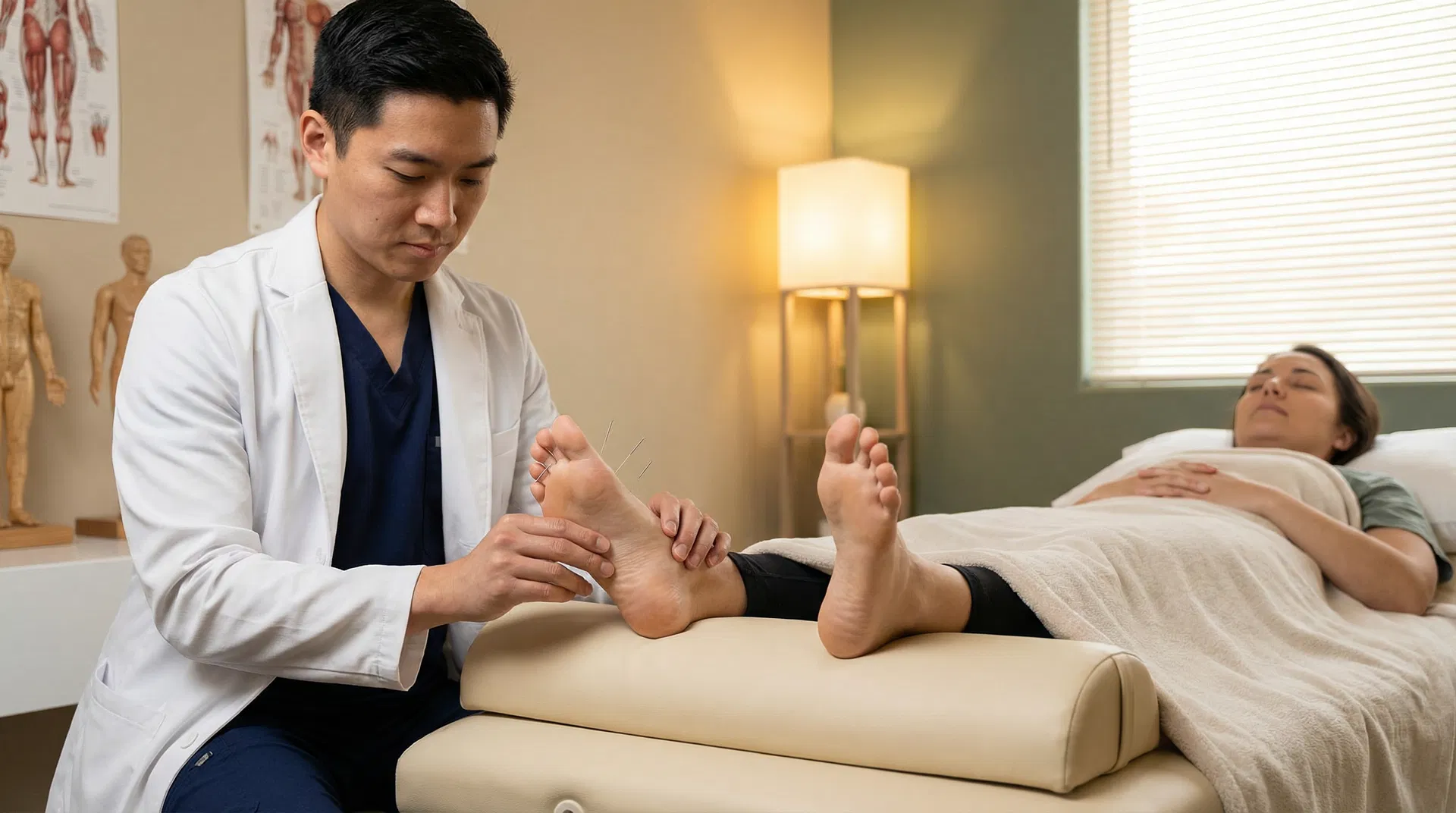
Acupuncture for Morton's Neuroma: Sharp Foot Pain Relief
What is Morton's Neuroma?
Morton's neuroma is a common foot condition that causes sharp, burning pain between the toes—typically between the third and fourth toes. If you're experiencing a sensation of a "lump" or "marble" in your foot, or sharp pain that radiates into your toes, you likely have Morton's neuroma.
Here's what's happening: A Morton's neuroma is a benign growth of nerve tissue (not a tumor) that develops in response to compression or irritation of a nerve in the foot. The nerve becomes thickened and inflamed, causing the characteristic sharp, burning pain. Many patients describe it as feeling like they're walking on a marble or pebble in their shoe.
The condition typically develops gradually and can become chronic if left untreated. Many people try conventional treatments like wider shoes, corticosteroid injections, or anti-inflammatory medications without lasting relief. Acupuncture offers a more effective, drug-free approach that addresses the root cause.
What Causes Morton's Neuroma?
Morton's neuroma develops when a nerve in the foot becomes compressed or irritated. Common causes include:
- Tight or restrictive footwear — Shoes that compress the forefoot or squeeze the toes
- High heels — Footwear that shifts weight forward onto the ball of the foot
- Repetitive activities — Running, jumping, or activities that put stress on the forefoot
- Foot structure — Flat feet, high arches, or toe deformities that create nerve compression
- Tight foot muscles — Tension in the intrinsic foot muscles can compress the nerve
- Inflammation — Chronic inflammation in the foot can irritate and thicken the nerve
The key insight is that Morton's neuroma isn't just a nerve problem—it's often related to tension in the foot muscles, inflammation, and biomechanical stress. This is why acupuncture, which addresses inflammation and muscle tension, is so effective.
Why Conventional Treatments Often Fail
Many patients with Morton's neuroma have tried wider shoes, corticosteroid injections, orthotics, or anti-inflammatory medications without lasting relief. Here's why these approaches often fall short:
- Wider shoes provide temporary relief — They can reduce symptoms while you're wearing them, but don't address the root cause
- Corticosteroid injections mask symptoms — They may provide temporary pain relief but don't promote healing and can weaken tissues
- Orthotics address mechanics only — While they can help, they don't address the underlying inflammation or nerve irritation
- Medications don't resolve the problem — Anti-inflammatory drugs may provide temporary pain relief but don't address why the nerve became irritated
This is where acupuncture shines. It addresses both the inflammation and the underlying nerve irritation that causes Morton's neuroma.
How Acupuncture Treats Morton's Neuroma
Acupuncture is highly effective for Morton's neuroma because it works on multiple levels:
1. Reducing Nerve Inflammation
Acupuncture stimulates the immune system to downregulate excessive inflammation around the affected nerve. By addressing the inflammatory process directly, acupuncture reduces nerve irritation and promotes healing of the thickened nerve tissue.
2. Releasing Foot Muscle Tension
The nerves in the foot don't work in isolation—they're surrounded by muscles, ligaments, and fascia. Acupuncture releases tension in the intrinsic foot muscles and the muscles of the lower leg, which reduces compression on the nerve. This is often the key to long-term relief.
3. Improving Circulation
Acupuncture improves blood flow to the affected area, bringing oxygen and nutrients that promote healing. Better circulation also helps remove inflammatory substances that perpetuate pain and nerve irritation.
4. Promoting Nerve Healing
By stimulating the body's natural healing response, acupuncture promotes the repair of irritated nerve tissue and reduces the thickening of the nerve. This leads to lasting relief rather than just temporary symptom management.
Typical Acupuncture Treatment for Morton's Neuroma
Treatment for Morton's neuroma addresses not just the foot, but the entire lower leg and foot system.
Areas We Treat:
- The affected nerve and surrounding foot tissue
- The intrinsic foot muscles
- The calf muscles (which affect foot mechanics)
- The plantar fascia
- The lower back and hip (to address compensation patterns)
Treatment Frequency:
Most patients benefit from 1-2 sessions per week initially. Many experience significant relief within 4-6 treatments, though some cases require extended treatment depending on how long the condition has been present and how severe it is.
What to Expect:
During your first visit, we'll assess your foot mechanics, evaluate the affected area, and determine the underlying cause of your Morton's neuroma. We'll ask about your footwear, activities, and any recent changes that may have contributed to the condition. Based on this assessment, we'll develop a personalized treatment plan.
Why Acupuncture Works Better Than Other Treatments
Unlike wider shoes or injections, acupuncture addresses the root cause of Morton's neuroma:
- Reduces inflammation directly — Rather than just masking pain, acupuncture addresses the inflammatory process
- Releases muscle tension — Acupuncture releases the foot and lower leg muscles that compress the nerve
- Promotes nerve healing — Acupuncture promotes the repair of irritated nerve tissue
- Treats the whole system — By treating the foot, lower leg, and addressing biomechanical issues, acupuncture resolves the underlying problem
- Works without medication — No side effects or dependency concerns
- Avoids surgery — Many patients avoid the need for surgical nerve removal
That said, acupuncture works best when combined with appropriate footwear, activity modification, and foot care. We'll provide specific guidance on all of these factors.
What to Expect: Your First Visit
When you come in for treatment of Morton's neuroma:
1. Comprehensive Assessment — We'll evaluate your foot mechanics, lower leg function, and the affected area
2. Biomechanical Analysis — We'll discuss your footwear, activities, and any factors contributing to your condition
3. Personalized Treatment Plan — Based on our findings, we'll create a treatment protocol specific to your situation
4. Acupuncture Treatment — Thin, sterile needles are placed to reduce inflammation and release muscle tension
5. Aftercare Guidance — We'll provide recommendations for footwear, activity modification, and foot care
Most patients feel improvement after their first treatment, with continued progress over 4-6 visits.
Why Choose In Balance Acupuncture for Morton's Neuroma?
At In Balance Acupuncture Clinic in Franklin, TN, we have extensive experience treating Morton's neuroma and understand the biomechanics of foot pain. Many patients come to us after trying other treatments without success, and we're able to provide effective relief.
Our practitioners use both traditional Japanese acupuncture and Traditional Chinese Medicine techniques to address the root cause of your foot pain. We've successfully treated hundreds of patients with Morton's neuroma, and many are surprised by how quickly acupuncture can resolve their sharp foot pain.
Ready to Treat Your Morton's Neuroma?
If you're experiencing sharp foot pain from Morton's neuroma, acupuncture can help. Contact In Balance Acupuncture Clinic in Franklin, TN today to schedule your consultation.
Call us at (615) 260-6944 or Book an Appointment
---
FAQ: Morton's Neuroma & Acupuncture
Q: How long does it take acupuncture to work for Morton's neuroma?
A: Many patients feel improvement after their first treatment. Most experience significant relief within 4-6 treatments. Some cases resolve faster, while chronic cases may require additional sessions.
Q: Is acupuncture painful for Morton's neuroma?
A: Acupuncture needles are extremely thin and most patients don't feel pain during treatment. You may feel a sensation of release or relief as the muscles relax and the nerve is decompressed, which is actually a positive sign.
Q: Should I change my footwear while getting acupuncture?
A: Yes, wearing appropriate footwear is important during treatment. We recommend avoiding tight shoes, high heels, and shoes that compress the forefoot. Wider shoes with good support can help reduce symptoms while acupuncture addresses the underlying cause.
Q: What if I've had Morton's neuroma for years?
A: Even chronic Morton's neuroma can respond well to acupuncture. Chronic cases may require more treatments, but many patients experience significant improvement. During your consultation, we'll assess your specific situation and provide realistic expectations.
Q: Can acupuncture help if I've already had a corticosteroid injection?
A: Yes. Acupuncture can help even if you've had previous injections. We'll assess your current condition and develop a treatment plan based on your specific situation.
Q: How is Morton's neuroma different from plantar fasciitis?
A: Morton's neuroma is a nerve condition that causes sharp pain between the toes, while plantar fasciitis is inflammation of the plantar fascia that causes heel pain. Both conditions can be effectively treated with acupuncture, but they require different treatment approaches.
---
Related Conditions
Morton's neuroma often occurs alongside other pain conditions. Understanding these related issues can help you get comprehensive treatment:
- Acupuncture for Plantar Fasciitis: Heel Pain Relief - Both foot conditions may occur together and respond well to acupuncture
- Acupuncture for Sciatica: Relief from Nerve Pain - Nerve compression can affect multiple areas along the sciatic pathway
- Acupuncture for Piriformis Syndrome: Deep Buttock Pain - Sciatic nerve involvement creates multiple pain points from buttock to foot
- Acupuncture for Hip Misalignment: Fixing Out of Place Hips - Biomechanical issues from hip misalignment contribute to nerve compression in the foot
Related Pain Management Articles
Explore other pain management solutions:
- Acupuncture for Sciatica: Relief from Nerve Pain — Natural pain relief for relief from nerve pain
- Acupuncture for Chronic Pain: Long-Term Relief Without Medication — Natural pain relief for long-term relief without medication
- Acupuncture for Hip Misalignment: Fixing Out of Place Hips — Natural pain relief for fixing out of place hips
- Acupuncture for Piriformis Syndrome: Deep Buttock Pain — Natural pain relief for deep buttock pain